
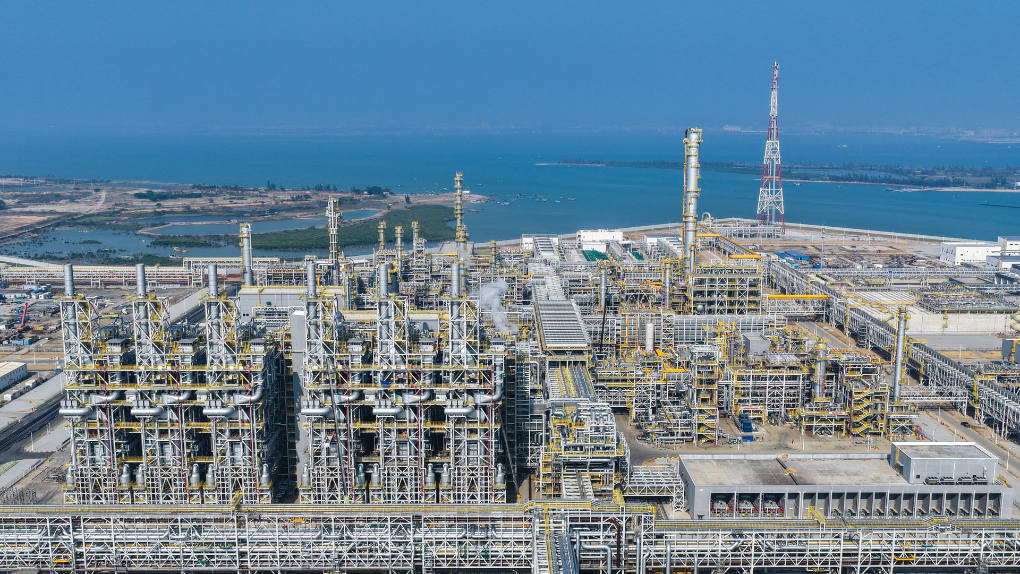
• BASF Commissions New Steam Cracker at Zhanjiang Site, Powered by Renewable Energy
ZHANJIANG, China – BASF announced on Wednesday the on-schedule commissioning of the steam cracker at its new Verbund site in southern China.
The plant, which has an annual capacity of one million tonnes of ethylene, is the first of its kind to be powered entirely by renewable energy for its main compressors.
What is new?
BASF has successfully started operations of the steam cracker at its newly constructed Verbund site in Zhanjiang. The plant is the core of the integrated complex and will supply basic chemicals, such as ethylene and propylene, to other production facilities on-site. The steam cracker uses steam to break down long-chain hydrocarbons, like naphtha or butane, and has a capacity of one million tonnes of ethylene per year.
Key Details
A significant feature of the new steam cracker is its use of 100 percent renewable energy to power its main compressors, a first for such a facility worldwide. The commissioning of the cracker follows the recent start-up of several plants for propylene by-products. BASF has also safely brought its petrochemical plants for ethylene oxide, ethylene glycol, and polyethylene into operation at the same location.
AI translation to Mandarin.
Strategic Importance
The Zhanjiang facility will be BASF’s third-largest Verbund site globally, after its complexes in Ludwigshafen, Germany, and Antwerp, Belgium. The company has positioned the site as a model for sustainable production, with the entire complex to be supplied by 100 percent renewable electricity.
Dr. Stephan Kothrade, a member of the Board of Executive Directors of BASF SE and Chief Technology Officer, stated the milestone “strengthens the diversified value chains of BASF in China considerably and enables us to support customers from many industries.” Products from the Zhanjiang site will primarily serve customers in the Chinese market.
About this company
BASF operates under the mission of creating “chemistry for a sustainable future,” combining economic success with environmental protection and social responsibility. The multinational company employs approximately 112,000 people and serves customers in nearly all sectors and countries.
Its portfolio includes the core business segments of Chemicals, Materials, Industrial Solutions, and Nutrition & Care, alongside standalone businesses in Surface Technologies and Agricultural Solutions. The company reported a global revenue of €65.3 billion in 2024. BASF shares are traded in Frankfurt (BAS) and as American Depositary Receipts (BASFY) in the United States.
Related Topics
Airbus Expands Earth Observation Capabilities with Pléiades Neo Next Program
Update: Rheinmetall and Honeywell To Develop Combat-Ready Augmented Reality Technologies